Treating Crohn’s Disease with Cannabis

Inflammatory bowel disease or IBD is a group of conditions that typically inflames the colon and small intestine. Crohn’s disease, however, can affect much more than just your colon and small intestine. Those with Crohn’s disease can experience issues with the mouth, esophagus, the stomach, and essentially any part of the gastrointestinal tract. Ulcerative colitis and Crohn’s disease are the two major conditions in this group of inflammatory ailments.
Symptoms of Crohn’s disease can include, abdominal cramping and pain, diarrhea, weight loss, appetite loss, nausea, anemia, rashes, arthritis, and the list just goes on. Like many strange maladies, the cause of Crohn’s disease is relatively unknown and widely debated. Despite this, the acquisition of Crohn’s disease is typically attributed to environmental, immune, bacterial, and genetic factors.
In fact, approximately half the risk associated with getting Crohn’s is genetic, with more than 70 genes being involved. In addition to this, daily tobacco smokers are roughly twice as likely to get the disease. Once acquired, the disease will proceed to convince the body’s immune system to attack the gastrointestinal tract. The diagnosis of Crohn’s disease is pretty straight forward; between medical imaging of the bowel wall and a biopsy, the disease can typically be identified with ease.
Crohn’s has no medical or surgical procedures that can cure the disease. Despite this, roughly half of all people with Crohn’s will require surgery at one point or another to deal with abscesses, bowel obstructions, and cancers. Typical treatments for Crohn’s disease include Anti-inflammatory and immunosuppressive drugs. Other treatments are simply self-care, getting plenty of sleep, eating lots of dietary fiber, and surgery.

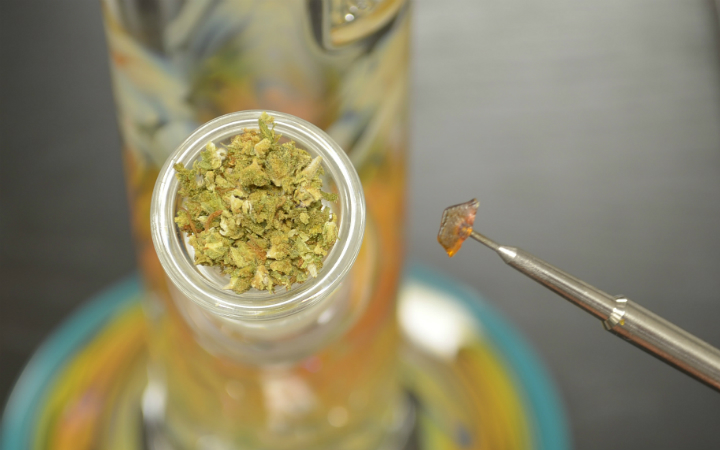
Medical marijuana can help with many aspects of Crohn’s disease. Two of these major aspects would be reducing inflammation due to the plant’s anti-inflammatory properties as well as acting as an analgesic to reduce pain. Other notable benefits of ingesting cannabis for those with Crohn’s disease is its ability to suppress nausea as well as increasing appetite.
Most of the negative symptoms caused by Crohn’s disease are due to inflammation. To understand why cannabis helps reduce inflammation, we must first identify the cause of inflammation as well as understand the basics of the endocannabinoid system. Essentially inflammation occurs as the immune system becomes compromised (which can happen due to a multitude of different reasons) this can lead to organ, joint, and tissue damage in various parts of the body. An endocannabinoid system is a group of cannabinoid receptors in the brain as well as the central and peripheral nervous systems.
Both THC, CBD and other cannabinoids found in the cannabis plant can help to reduce inflammation as well as help to regulate the immune system. More specifically these cannabinoids help reduce inflammation by activating the CB2 receptor in the endocannabinoid system. Unlike the CB1 receptor which is typically responsible for the main psychoactive effects of smoking cannabis, the CB2 receptor is typically responsible for reducing inflammation. A study in 2008 showed that when giving cannabinoids to mice who had inflamed paws, an approximate 70% decrease in inflammation was observed. In the same study they gave cannabinoids to mice who had been bred without CB2 receptors, they showed no improvement in inflammation.
Overall cannabis seems like it could be a very effective treatment for Crohn’s disease as well as other irritable bowel-related conditions. Cannabinoids have been proven time and time again to reduce inflammation by engaging the endocannabinoid system.