
What Is the Endocannabinoid System?
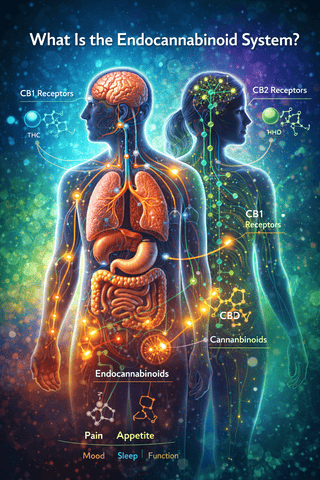
Many people are curious about weed and how it affects the body. But to truly understand that, you must first answer an important question:
What is the endocannabinoid system?
The endocannabinoid system, often called the ECS, is a special system inside your body. It helps keep everything balanced. It plays a role in mood, sleep, pain, appetite, memory, and more.
Even if someone has never used cannabis, they still have an endocannabinoid system. This system works every day to help keep the body stable.
Let’s break it down in a simple way.
Did you know that you can buy cannabis products online at Medicineman’s Dispensary. They do not sell Delta-8 or related items. They sell real cannabis with real THC! They also sell vapes, concentrates and other cannabis related products.
What Is the Endocannabinoid System?
The endocannabinoid system is a network inside your body. It is made up of:
-
Endocannabinoids
-
Receptors
-
Enzymes
Together, these three parts help control balance in the body. Scientists call this balance “homeostasis.”
Homeostasis means keeping things steady. For example:
-
Not too hot
-
Not too cold
-
Not too stressed
-
Not too tired
The ECS helps your body stay in the middle.
Why Is the Endocannabinoid System Important?
The endocannabinoid system affects many things, including:
-
Mood
-
Pain
-
Sleep
-
Hunger
-
Memory
-
Inflammation
-
Immune response
This is why people who use weed often feel changes in:
-
Relaxation
-
Appetite
-
Focus
-
Sleep
Weed works by interacting with the endocannabinoid system.
The Three Main Parts of the ECS
To understand what is the endocannabinoid system, let’s look at its three parts.
1. Endocannabinoids
Endocannabinoids are natural chemicals made by your body.
Your body makes them on demand. That means your body produces them when needed.
Two of the main endocannabinoids are:
-
Anandamide
-
2-AG
These chemicals help send messages between cells.
2. Receptors
Receptors are like tiny locks. Endocannabinoids are like keys.
There are two main types:
-
CB1 receptors
-
CB2 receptors
CB1 receptors are mostly found in the brain and nervous system.
CB2 receptors are found mostly in the immune system.
When weed is used, THC and CBD connect to these same receptors.
3. Enzymes
Enzymes break down endocannabinoids after they finish their job.
This keeps the system balanced.
How Weed Affects the Endocannabinoid System
When someone uses cannabis, cannabinoids from the plant enter the body.
THC connects mainly to CB1 receptors in the brain.
CBD interacts more gently and may affect several systems.
This is why weed can:
-
Change mood
-
Reduce pain
-
Increase appetite
-
Affect memory
The plant compounds work with the ECS that already exists inside the body.
What Does the Endocannabinoid System Do?
Let’s explore some of its main jobs.
Mood Balance
The ECS helps regulate mood.
Low endocannabinoid levels may be linked to:
-
Stress
-
Anxiety
-
Low mood
That is one reason people ask if weed helps with depression or anxiety.
Pain Control
The endocannabinoid system helps control how pain signals travel in the body.
That is why medical marijuana may help some people with chronic pain.
Sleep Regulation
The ECS plays a role in the sleep-wake cycle.
This is why cannabis may help some adults fall asleep faster.
Appetite and Digestion
The ECS affects hunger signals.
When someone says weed gives them “the munchies,” it is because THC activates appetite-related receptors.
The Brain and the ECS
The brain has many CB1 receptors.
This explains why weed strongly affects:
-
Memory
-
Thinking
-
Emotions
-
Coordination
But remember, the ECS works even without cannabis.
It helps manage stress, memory, and mood naturally.
The Immune System and the ECS
CB2 receptors are found mainly in immune cells.
The endocannabinoid system helps:
-
Control inflammation
-
Regulate immune responses
Researchers are studying whether cannabinoids may help inflammatory diseases.
What Happens if the Endocannabinoid System Is Out of Balance?
Some scientists believe certain conditions may be linked to something called “clinical endocannabinoid deficiency.”
This theory suggests that low endocannabinoid levels may contribute to:
-
Migraines
-
Irritable bowel syndrome
-
Fibromyalgia
Research is ongoing.
More studies are needed to fully understand this idea.
Did you know that you can buy cannabis products online at Medicineman’s Dispensary. They do not sell Delta-8 or related items. They sell real cannabis with real THC! They also sell vapes, concentrates and other cannabis related products.
THC vs CBD in the ECS
Not all cannabinoids act the same way.
THC
-
Binds directly to CB1 receptors
-
Causes a high
-
Alters perception
CBD
-
Does not strongly bind to CB1
-
May influence receptors indirectly
-
May help regulate anxiety and inflammation
This difference explains why CBD often feels calmer and less intense.
Is the Endocannabinoid System Only About Weed?
No.
The ECS is a natural part of the human body.
Even people who have never used weed have a functioning endocannabinoid system.
Weed simply interacts with this system.
How Does the ECS Help With Stress?
Stress affects the entire body.
The endocannabinoid system helps calm stress responses.
It may:
-
Reduce cortisol levels
-
Calm the nervous system
-
Restore balance after stress
This is one reason cannabis may feel relaxing to some people.
Exercise and the Endocannabinoid System
Have you ever heard of a “runner’s high”?
For many years, people thought endorphins caused it. Now, research suggests endocannabinoids may play a role.
Exercise may increase endocannabinoid levels naturally.
This shows the ECS works in many everyday activities.
Aging and the ECS
As people age, ECS function may change.
Some researchers believe this could affect:
-
Sleep patterns
-
Pain sensitivity
-
Mood stability
That is one reason older adults are curious about medical marijuana.
Safety and Balance
While weed interacts with the ECS, too much THC can overwhelm receptors.
This may lead to:
-
Anxiety
-
Memory problems
-
Dizziness
Moderation is important.
The ECS is about balance.
What Does Research Say?
Research on the endocannabinoid system has grown quickly in the past 30 years.
Scientists now understand that the ECS is one of the most important regulatory systems in the body.
But there is still much to learn.
Research is ongoing in areas like:
-
Mental health
-
Chronic pain
-
Autoimmune disorders
-
Sleep disorders
Why Understanding the ECS Matters
Understanding what is the endocannabinoid system helps people:
-
Make informed decisions
-
Understand how weed affects them
-
Learn how the body maintains balance
It also reduces fear and confusion.
The ECS is not something strange or new. It is a natural part of the body.
Key Takeaways
Let’s simplify everything.
The endocannabinoid system:
-
Is found in every human
-
Helps keep the body balanced
-
Controls mood, pain, sleep, and appetite
-
Has receptors called CB1 and CB2
-
Works even if someone never uses cannabis
Weed interacts with this system, which is why it affects the body in many ways.
Final Thoughts
So, what is the endocannabinoid system?
It is one of the body’s most important balancing systems.
It helps regulate:
-
Mood
-
Pain
-
Sleep
-
Hunger
-
Memory
-
Immune function
When someone uses weed, plant cannabinoids connect with this system.
Understanding the ECS helps explain why cannabis has such wide-ranging effects.
The endocannabinoid system is still being studied. But one thing is clear: it plays a major role in human health and balance.
SEO Phrases
What Is the Endocannabinoid System
Endocannabinoid System Explained
How the Endocannabinoid System Works
What Does the Endocannabinoid System Do
Cannabis and the Endocannabinoid System
Weed and CB1 Receptors
CB2 Receptors Explained
THC and the Endocannabinoid System
CBD and the Endocannabinoid System
Medical Marijuana and ECS
Endocannabinoid System and Pain
Endocannabinoid System and Sleep
Endocannabinoid System and Anxiety
Endocannabinoid System and Mood
What Are Endocannabinoids
How Weed Affects the Body
Cannabinoid Receptors Explained
Homeostasis and the Endocannabinoid System
ECS and Inflammation
Natural Endocannabinoid Function