How Light Spectrum Affects Cannabis Growth
Light is one of the most important parts of growing healthy weed plants. Without light, weed plants cannot grow properly. Light gives plants the energy they need to create leaves, stems, buds, and resin.
But not all light is the same. Different colors of light can affect weed plants in different ways. This is called the light spectrum.
Modern growers pay close attention to light spectrum because it can change:
- Plant size
- Bud growth
- THC levels
- Terpene production
- Yield
- Overall weed quality
In this article, we will explain how light spectrum affects cannabis growth and why different types of light matter so much in modern weed cultivation.
Did you know that you can buy cannabis products online at Medicineman’s Dispensary. They do not sell Delta-8 or related items. They sell real cannabis with real THC! They also sell vapes, concentrates and other cannabis related products.
What Is the Light Spectrum?
The light spectrum is the range of colors found in light.
Sunlight contains many colors, including:
- Blue
- Green
- Yellow
- Orange
- Red
- Violet
Each color has a different wavelength and energy level.
Weed plants react differently to each part of the spectrum.
Modern indoor growers often use special grow lights that can control which colors the plants receive.
Why Light Matters for Weed Plants
Weed plants use light for photosynthesis. Photosynthesis is the process plants use to turn light into energy.
Without enough light, weed plants may become:
- Weak
- Thin
- Slow-growing
- Low in potency
Strong lighting helps plants produce healthy leaves, dense buds, and rich trichomes.
Light also helps control the plant’s life cycle.
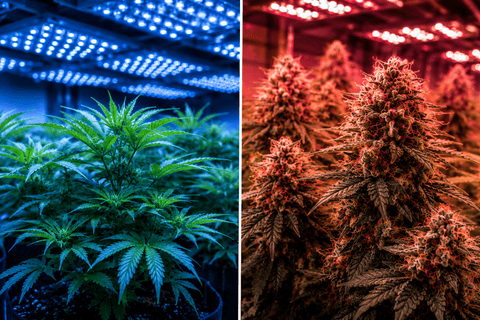
Blue Light and Weed Growth
Blue light plays a major role during the early growth stage of weed plants.
Blue light helps plants develop:
- Strong stems
- Healthy leaves
- Compact growth
- Thick structure
Many indoor growers use blue-heavy light during the vegetative stage.
The vegetative stage is when weed plants focus on growing larger before producing flowers.
Plants grown under blue light often stay shorter and bushier.
Why Shorter Plants Can Be Helpful
Indoor growers often prefer shorter, bushier weed plants because they fit better inside grow rooms and tents.
Bushier plants may also develop:
- More bud sites
- Better airflow
- More even canopy growth
Blue light helps growers manage plant shape and structure more easily.
Red Light and Flowering
Red light becomes very important during the flowering stage.
The flowering stage is when weed plants begin producing buds.
Red light helps encourage:
- Flower production
- Bud growth
- Larger yields
- Faster flowering
Many indoor growers increase red light exposure once plants begin flowering.
This helps plants focus energy on producing dense weed buds.
Far-Red Light and Stretching
Far-red light is slightly outside the visible red spectrum.
Far-red light can affect how weed plants stretch and grow taller.
Some growers use far-red lighting carefully to:
- Increase plant size
- Speed flowering responses
- Improve canopy penetration
Too much far-red light can sometimes cause plants to stretch too much and become weak.
Growers try to balance the spectrum carefully.
Full-Spectrum Grow Lights
Many modern growers now use full-spectrum grow lights.
Full-spectrum lights try to mimic natural sunlight by combining multiple colors together.
These lights may include:
- Blue light
- Red light
- White light
- Far-red light
Full-spectrum LED lights have become very popular in modern weed growing.
Many growers believe full-spectrum lighting helps improve:
- Flavor
- Potency
- Yield
- Terpenes
- Plant health
LED Grow Lights and Modern Weed Farming
LED grow lights have changed indoor weed cultivation in recent years.
Older grow lights often produced too much heat and used large amounts of electricity.
Modern LED systems offer:
- Better energy efficiency
- Lower heat
- Adjustable spectrum settings
- Better control
Growers can now customize light recipes for different stages of growth.
This gives indoor weed farms more precision than ever before.
Light Spectrum and THC Production
Many growers believe light spectrum can affect THC production.
Strong lighting and proper spectrum balance may help plants produce more trichomes.
Trichomes are the tiny crystal-like structures that contain cannabinoids and terpenes.
Healthy trichome production can improve:
- THC potency
- Aroma
- Flavor
- Resin levels
This is one reason lighting technology is such a major part of premium indoor weed cultivation.
Light Spectrum and Terpenes
Terpenes give weed its smell and flavor.
Different terpene profiles can create:
- Citrus aromas
- Pine smells
- Sweet flavors
- Earthy scents
- Fruity notes
Some growers believe certain light spectrums may help increase terpene production.
Balanced lighting may help preserve delicate aromatic compounds during flower development.
This can improve the overall weed experience.
UV Light and Weed Plants
Some growers experiment with ultraviolet light, also called UV light.
UV light contains strong energy that can stress plants slightly.
Small amounts of UV exposure may encourage plants to produce more resin as protection.
This could possibly increase trichome production.
However, too much UV light can damage plants.
Growers must use UV lighting very carefully.
Did you know that you can buy cannabis products online at Medicineman’s Dispensary. They do not sell Delta-8 or related items. They sell real cannabis with real THC! They also sell vapes, concentrates and other cannabis related products.
Indoor Lighting vs Sunlight
Outdoor weed grows under natural sunlight, which already contains a full spectrum of colors.
Indoor growers try to recreate sunlight using artificial grow lights.
Sunlight is powerful and free, but indoor lighting offers more control.
Indoor growers can:
- Adjust light intensity
- Change spectrum balance
- Control light schedules
- Reduce weather problems
This helps create consistent weed crops year-round.
Light Cycles and Weed Growth
Weed plants also respond to how many hours of light they receive each day.
During the vegetative stage, growers often use:
- 18 hours of light
- 6 hours of darkness
To trigger flowering, growers usually switch to:
- 12 hours of light
- 12 hours of darkness
This change tells the weed plant to start producing buds.
Light schedules are just as important as light spectrum.
Too Much Light Can Hurt Weed Plants
More light is not always better.
Too much intense light can stress weed plants and cause problems like:
- Burned leaves
- Bleached buds
- Heat stress
- Slowed growth
Growers carefully position lights to avoid damaging the plants.
Modern LED systems often allow brightness adjustments to help manage this.
Why Indoor Growers Obsess Over Lighting
Lighting is one of the biggest factors affecting indoor weed quality.
Experienced growers spend a lot of time adjusting:
- Light spectrum
- Light intensity
- Light placement
- Flowering schedules
Even small lighting changes can affect the final product.
This is why professional indoor weed farms invest heavily in advanced lighting systems.
The Future of Weed Lighting Technology
Lighting technology keeps improving every year.
Future grow systems may include:
- AI-controlled lighting
- Automated spectrum changes
- Smarter LED systems
- Precision terpene lighting
- Energy-saving grow rooms
Scientists are still studying how different wavelengths affect weed plants.
As research grows, lighting systems may become even more specialized.
Final Thoughts
Light spectrum plays a huge role in how weed plants grow, smell, taste, and produce THC. Different colors of light affect different parts of the plant’s development.
Blue light helps with structure and leaf growth. Red light helps with flowering and bud production. Full-spectrum lighting helps indoor growers mimic natural sunlight and improve overall plant quality.
Modern weed cultivation depends heavily on advanced lighting systems. Whether growing for potency, flavor, yield, or terpene production, lighting remains one of the most important tools in indoor weed farming.
As weed science and LED technology continue improving, light spectrum research will likely become even more important in the future of modern weed cultivation.
SEO Phrases
- How Light Spectrum Affects Cannabis Growth
- cannabis light spectrum
- weed grow lights
- indoor weed lighting
- LED grow lights for weed
- cannabis cultivation lighting
- blue light weed growth
- red light weed flowering
- full-spectrum grow lights
- cannabis flowering lights
- indoor cannabis growing
- weed plant light cycle
- grow lights for cannabis
- weed potency lighting
- terpene production lighting
- THC production grow lights
- cannabis LED technology
- indoor weed farming
- weed plant spectrum
- modern cannabis cultivation
- weed trichome production
- cannabis photosynthesis
- weed flowering stage
- cannabis vegetative stage
- best grow lights for weed
- cannabis indoor grow setup
- premium indoor weed growing
- cannabis lighting technology
- indoor marijuana lighting
- light spectrum for weed plants