What Happens to THC When You Cook It?
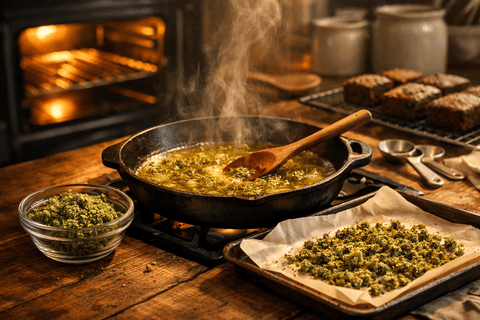
If you have ever wondered, what happens to THC when you cook it?, you are not alone. Many people who enjoy weed are curious about how heat changes THC. This question is very important if you want to make edibles, bake with weed, or cook THC into food.
THC is the part of cannabis that makes you feel high. But THC does not stay the same when you cook it. Heat can change it. Time can change it. Even the way you cook it can change it.
In this article, we will explain:
-
What THC is
-
What happens to THC when you cook it
-
Why decarboxylation is important
-
How temperature affects THC
-
What happens if THC gets too hot
-
Why edibles feel stronger
-
How to protect THC when cooking
Let’s break it down in a simple way.
Did you know that you can buy cannabis products online at Medicineman’s Dispensary. They do not sell Delta-8 or related items. They sell real cannabis with real THC! They also sell vapes, concentrates and other cannabis related products.
What Is THC?
THC stands for tetrahydrocannabinol. It is the main active compound in weed that causes the high feeling.
But here is something many beginners do not know:
Raw cannabis does NOT contain active THC.
Instead, raw weed contains THCA. THCA is not psychoactive. That means it will not make you feel high.
So if you eat raw weed straight from the plant, you will not feel much.
This is where heat comes in.
What Happens to THC When You Cook It? The Big Change
The most important thing that happens to THC when you cook it is a process called decarboxylation.
Decarboxylation sounds complicated, but it is simple.
When you heat weed:
THCA → turns into → THC
This happens because heat removes a tiny chemical piece called a carboxyl group.
Without heat, THCA stays inactive.
With heat, it becomes THC.
So when asking, what happens to THC when you cook it? the first answer is:
👉 Heat activates it.
This is why you must heat cannabis before making edibles.
What Is Decarboxylation?
Decarboxylation is the most important step when cooking with weed.
If you skip it, your edibles will not be very strong.
Decarboxylation usually happens at around:
-
220°F to 240°F
-
For about 30 to 45 minutes
This gently activates THC without burning it.
Many people decarb their weed in the oven before mixing it into butter or oil.
So when people search for:
-
What happens to THC when you cook it?
-
Does cooking destroy THC?
-
How does THC activate?
The answer often starts with decarboxylation.
What Happens If You Cook THC Too Hot?
Now here is the tricky part.
THC is sensitive.
If you cook weed at very high temperatures, THC can:
-
Break down
-
Turn into other compounds
-
Evaporate
-
Lose potency
THC begins to degrade around 300°F and above.
At very high temperatures, THC can turn into CBN.
CBN is another cannabinoid that may make you feel sleepy instead of high.
So if you are baking cookies at 350°F, does that destroy the THC?
Not exactly.
The inside of the food usually stays cooler than the oven temperature. That helps protect the THC.
Still, too much heat for too long can reduce potency.
Does Cooking Weed Make It Stronger?
This is one of the most common SEO questions:
Does cooking weed make it stronger?
The answer is:
Cooking activates THC, but it does not automatically make it stronger.
Edibles feel stronger than smoking because of how your body processes THC.
When you smoke weed:
-
THC goes from your lungs to your brain quickly.
When you eat THC:
-
It goes through your stomach and liver first.
Your liver changes THC into 11-hydroxy-THC.
This form is stronger and lasts longer.
That is why edibles feel more powerful.
So when people ask, what happens to THC when you cook it?, part of the answer involves how your body changes it after you eat it.
What Happens to THC in Butter or Oil?
THC does not mix well with water.
But it mixes very well with fat.
That is why most edible recipes use:
-
Butter
-
Coconut oil
-
Olive oil
When you cook weed into butter, THC binds to the fat molecules.
This helps your body absorb it.
If you just sprinkle weed into soup without fat, you may not absorb THC well.
This is why cannabutter is so popular.
So another answer to what happens to THC when you cook it? is:
It binds to fats and becomes easier for your body to use.
Did you know that you can buy cannabis products online at Medicineman’s Dispensary. They do not sell Delta-8 or related items. They sell real cannabis with real THC! They also sell vapes, concentrates and other cannabis related products.
Can THC Evaporate?
Yes.
THC has a boiling point of about 315°F.
That means if it gets hot enough, it can turn into vapor.
This happens when you smoke or vape weed.
But during cooking, food usually protects it.
Still, if you heat oil on the stove at very high temperatures, some THC can evaporate or break down.
Low and slow cooking helps keep THC stable.
What Happens to THC Over Time?
Heat is not the only thing that changes THC.
Time also matters.
If cooked weed sits in light and air for too long, THC can:
-
Oxidize
-
Turn into CBN
-
Lose potency
That is why edibles should be stored:
-
In airtight containers
-
Away from light
-
In cool places
When people ask, what happens to THC when you cook it and store it?, this is part of the answer.
Why Do Edibles Feel Different Than Smoking?
This is one of the biggest questions in weed culture.
When you cook THC into food and eat it, the experience is different.
Smoking weed:
-
Effects start in minutes
-
Last 1–3 hours
Eating THC:
-
Takes 30–90 minutes to start
-
Lasts 4–8 hours (or longer)
-
Can feel stronger
This difference happens because of liver metabolism.
So cooking THC does not just activate it. It changes how it works in your body.
Does Microwaving Destroy THC?
Some people wonder if microwaving weed ruins THC.
Microwaves heat unevenly and can create hot spots.
This can:
-
Overheat small areas
-
Reduce potency
It is not the best way to decarboxylate cannabis.
Oven decarboxylation is much more controlled.
What Happens If You Burn Weed While Cooking?
If weed burns, THC can be destroyed.
Burning happens at high temperatures.
Burned weed may:
-
Taste bad
-
Smell harsh
-
Have reduced THC
That is why recipes often say to simmer gently.
Low heat protects cannabinoids.
What Happens to Other Cannabinoids When You Cook Weed?
THC is not the only compound in cannabis.
Other cannabinoids include:
-
CBD
-
CBN
-
CBG
Heat affects them too.
Some degrade faster than THC.
Terpenes, which give weed its smell, are very sensitive. Many terpenes evaporate at low temperatures.
So when you cook weed, you are not only changing THC. You are changing flavor, aroma, and effect.
This is another important part of the answer to:
What happens to THC when you cook it?
It changes along with other plant compounds.
Can You Overcook Edibles?
Yes.
Overcooking can:
-
Reduce THC strength
-
Change flavor
-
Create sleepy effects from CBN
That is why many people follow careful temperature guides when cooking cannabis.
Best Temperatures for Cooking THC
Here is a simple guide:
Decarboxylation:
220–240°F
Infusing butter:
160–200°F
Baking edibles:
Keep internal temp under 300°F if possible
Low and slow is best.
What Happens If You Freeze THC?
Freezing does not destroy THC.
In fact, freezing weed helps preserve it.
Cold storage slows down degradation.
That is why some people freeze cannabutter.
What Happens to THC in Long Simmer Recipes?
Slow cookers are popular for making infused oils.
As long as temperatures stay controlled, THC remains stable.
Too much time at high heat can slowly reduce potency.
But gentle simmering works well.
Why Temperature Control Is So Important
When asking what happens to THC when you cook it?, the biggest factor is temperature.
Too low:
-
THC may not fully activate
Too high:
-
THC may degrade
Just right:
-
Strong and effective edibles
Precision matters.
Common Mistakes When Cooking with Weed
-
Skipping decarboxylation
-
Cooking at very high heat
-
Not using enough fat
-
Burning the weed
-
Not measuring dosage
Each mistake changes what happens to THC when you cook it.
Does Air Frying Destroy THC?
Air fryers run hot and circulate strong heat.
They may activate THC quickly but also risk degrading it.
Careful temperature control is key.
What Happens to THC Chemically?
Here is a simple explanation:
-
Raw weed contains THCA
-
Heat removes carbon dioxide
-
THCA becomes THC
-
High heat breaks THC down
-
Oxygen slowly converts THC to CBN
That is the life cycle of THC during cooking.
Is Cooking Weed Safe?
Cooking cannabis is common for edibles.
But dosing matters.
Edibles can feel much stronger than smoking.
Start low. Go slow.
Final Thoughts: What Happens to THC When You Cook It?
So let’s summarize clearly.
When you cook weed:
-
Heat activates THCA into THC
-
THC binds to fats
-
Too much heat reduces potency
-
Proper temperatures protect cannabinoids
-
Your liver changes THC into a stronger form after eating
The most important answer to:
What happens to THC when you cook it?
Is this:
Heat activates it — but too much heat can destroy it.
Cooking weed is both science and art.
If you respect the temperature and take your time, you can make powerful, long-lasting edibles.
SEO Phrases for This Article
-
What happens to THC when you cook it
-
Does cooking destroy THC
-
THC activation process
-
Decarboxylation of cannabis
-
How to activate THC
-
Cooking with weed
-
THC boiling point
-
Does heat destroy THC
-
THC in edibles
-
How edibles work
-
Baking with cannabis
-
Cannabutter recipe science
-
THC degradation temperature
-
How to cook weed properly
-
Weed decarb temperature
-
Does microwaving weed ruin THC
-
THC when heated
-
How heat affects THC
-
Cannabis cooking temperature guide
-
Why edibles are stronger than smoking