THC Percentages Explained
If you shop for weed, you may see a big number on the label. It might say 18% THC, 24% THC, or even 30% THC. Many people look at that number first. They may think a higher number always means a better product. But that is not always true.
THC percentages can be confusing at first. What do they really mean? How are they measured? Does a higher THC percentage always mean a stronger effect? And how much does that number really tell you about the full experience?
This guide will make it simple. We will break down THC percentages explained in a way that is easy to understand. By the end, you will know what THC percentage means, why it matters, and why it is only one part of the story.
Did you know that you can buy cannabis products online at Medicineman’s Dispensary. They do not sell Delta-8 or related items. They sell real cannabis with real THC! They also sell vapes, concentrates and other cannabis related products.
What Is THC?
THC stands for tetrahydrocannabinol. It is the main compound in weed that causes the “high” feeling. When people talk about weed being strong, they are often talking about how much THC it has.
THC is one of many compounds found in the plant. Another well-known compound is CBD. But when it comes to feeling strong mental effects, THC is usually the main focus.
That is why labels often show the THC level in a big, easy-to-see place. Buyers want to know how much THC is in the product before they choose it.
What Does THC Percentage Mean?
THC percentage tells you how much of a product is made up of THC by weight.
Here is a simple way to think about it:
- If flower has 20% THC, that means about 20% of its weight is THC.
- If a gram of flower weighs 1,000 milligrams, then 20% THC means about 200 milligrams of THC are in that gram.
This is the basic idea behind THC percentages explained. The number is meant to show how much THC is inside the product.
But there is an important catch. That number does not always tell you exactly how you will feel. Your body, your mood, the product type, and other plant compounds can all change the experience.
Why THC Percentages Matter
THC percentage matters because it gives you a quick idea of potency. Potency means strength.
A higher THC percentage usually means the product has more THC in it. A lower THC percentage usually means it has less. This can help people compare products side by side.
For example:
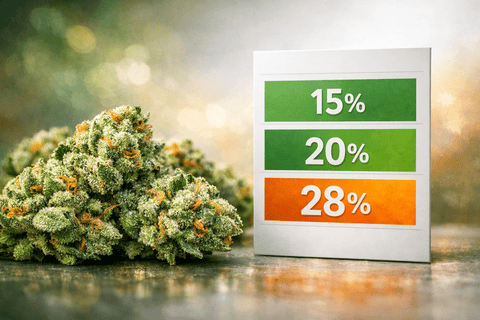
- A flower with 12% THC may feel milder
- A flower with 20% THC may feel stronger
- A flower with 28% THC may feel very strong for some people
So yes, THC percentage can be useful. It gives a starting point. But it should not be the only thing you look at.
That is one of the most important lessons in THC percentages explained.
THC Percentages in Flower
Weed flower is one of the most common product types. THC percentages in flower can vary a lot.
In general, flower may fall into ranges like these:
- Low THC: around 10% to 15%
- Medium THC: around 15% to 20%
- High THC: around 20% to 25%
- Very high THC: 25% and up
These are not strict rules, but they can help you understand the label.
Some people think a 30% THC flower must always be better than a 20% flower. That is not always true. A lower-THC flower may still feel great because of the terpenes, freshness, and overall quality.
When reading THC percentages explained, remember this: higher is not always better. Sometimes balance matters more than raw numbers.
THC Percentages in Pre-Rolls
Pre-rolls are joints that are already rolled for you. The THC percentage in a pre-roll usually depends on the flower inside it.
If the label says the pre-roll has 22% THC, that usually means the flower used in it tested at 22% THC.
Still, the actual experience can depend on more than the number. How evenly it burns, how fresh it is, and how much is smoked can all make a difference.
That is why understanding THC percentages is about more than just reading one number on the package.
THC Percentages in Concentrates
Concentrates are very different from flower. These products are made to pull out the strongest parts of the plant, including THC.
Because of that, concentrate THC percentages are often much higher.
You may see:
- Vape oils at 70% to 90% THC
- Wax or shatter at 60% to 85% THC
- Other extracts with very high THC levels
This does not mean they are “better.” It just means they are more concentrated.
When people search for THC percentages explained for beginners, this is where confusion often starts. A 75% THC vape is not the same as a 20% THC flower. They are different products used in different ways.
THC Percentages in Edibles
Edibles are labeled differently from flower and concentrates.
Instead of showing a THC percentage, edibles often show milligrams of THC per serving and milligrams per package.
For example:
- 5 mg THC per gummy
- 10 mg THC per chocolate piece
- 100 mg THC in the full package
That is because edibles are measured by dose, not by percentage in the same way flower is.
Still, people often search for THC percentages explained in edibles. The easy answer is that edible labels usually focus on milligrams instead of percentages because that is a more helpful way to understand the product.
How THC Is Tested
THC percentages usually come from lab testing. A sample of the product is sent to a lab, and the lab checks how much THC is in it.
This sounds simple, but a few things can affect the result:
- The sample may not represent the whole batch
- Different labs may get slightly different results
- Flower can lose freshness over time
- Moisture levels can change the weight and reading
So the THC percentage on the label is useful, but it is not a perfect magic number.
This is another key part of THC percentages explained clearly. The number is an estimate based on testing, not a promise of the exact same experience every time.
THCA vs THC
This part can confuse many people.
Fresh weed flower often contains a lot of THCA, not just THC. THCA is the raw form that changes into THC when heated.
When flower is smoked, vaped, or cooked, heat turns THCA into THC. That is why labels may show:
- THC
- THCA
- Total THC
So if a label has a low THC number but a high THCA number, the product may still be strong once it is heated.
Many people reading THC percentages explained are surprised by this. They thought only the THC number mattered. But total THC often gives a fuller picture.
Does Higher THC Mean Better Weed?
No. Higher THC does not always mean better weed.
This is one of the biggest myths in the market.
A product with very high THC may look impressive on the label, but that does not guarantee it will give the best experience. A lot of other things matter too, including:
- Terpenes
- Freshness
- Cure quality
- Strain type
- Your own body
- Your tolerance
Some people may enjoy a 17% THC flower with rich terpenes more than a 28% THC flower with less flavor and balance.
So when people ask, what does THC percentage mean, the answer is this: it tells you part of the story, not the whole story.
What Are Terpenes?
Terpenes are natural compounds in weed that give it its smell and flavor. They are also believed to shape the overall feel of the experience.
Some terpenes may smell fruity. Others may smell earthy, spicy, or citrusy.
A flower with strong terpene content may feel more enjoyable or more unique than one with a higher THC percentage but weak terpene levels.
That is why many experienced shoppers do not chase THC alone. They look at the full profile.
In simple terms, THC percentages explained should always include terpenes, because THC by itself does not tell you everything.
Tolerance Matters Too
Two people can use the same product and have very different experiences.
Why? One big reason is tolerance.
Tolerance is how used your body is to THC. If someone uses THC often, they may feel less from the same amount. If someone rarely uses it, the same product may feel much stronger.
So a 20% THC flower may feel mild to one person and very strong to another.
This is why understanding THC percentages is personal. The label matters, but your own body matters too.
Why Labels Can Be Misleading
Sometimes shoppers see a very high THC number and assume that product must be the best one in the store. But numbers can be misleading.
Here are a few reasons why:
1. The highest number gets attention
Brands know people notice high THC percentages. That can make shoppers chase numbers instead of quality.
2. Lab results can vary
One lab may test a little higher than another.
3. Freshness changes things
Older flower may not feel the same as fresh flower, even if the label shows a high THC percentage.
4. The full plant matters
THC is only one compound in weed. Other compounds shape the full effect.
This is why a smart buyer looks beyond the headline number.
Did you know that you can buy cannabis products online at Medicineman’s Dispensary. They do not sell Delta-8 or related items. They sell real cannabis with real THC! They also sell vapes, concentrates and other cannabis related products.
What Is a Good THC Percentage?
There is no one perfect THC percentage for everyone.
A “good” THC percentage depends on the product and the person.
For flower, many people may consider:
- 10% to 15% THC: lighter
- 15% to 20% THC: moderate
- 20% to 25% THC: strong
- 25%+ THC: very strong
But again, stronger does not always mean better.
For some people, a mid-range product may feel more comfortable and enjoyable than one with very high THC.
That is why searches for best THC percentage for weed do not have one simple answer. The right choice depends on what someone wants from the product.
THC Percentage and Product Type
One reason THC percentages confuse people is that each product type works differently.
Flower, vapes, concentrates, and edibles are not all equal, even when the numbers seem easy to compare.
For example:
- 20% THC flower
- 80% THC vape
- 10 mg THC edible
These are all measured in different ways. They also act differently in the body.
That is why THC percentages explained for flower and concentrates should never be mixed up with edible dosing. They are related, but not the same.
Why the Full Experience Matters
Many shoppers focus only on getting the highest THC they can find. But the full experience comes from many things working together.
These include:
- THC level
- Terpene profile
- Cannabinoid balance
- Product freshness
- How the product was grown
- How it was stored
- Individual body chemistry
That means a great weed product is not always the one with the biggest number. Sometimes the best product is the one that feels balanced, smells fresh, tastes good, and matches what the person is looking for.
Common Myths About THC Percentages
Let’s clear up some common myths.
Myth 1: Higher THC always means better quality
False. High THC does not guarantee better flavor, freshness, or experience.
Myth 2: THC percentage tells you exactly how you will feel
False. Many things affect the experience, including terpenes and tolerance.
Myth 3: Low-THC flower is weak and bad
False. Some lower-THC flower can still be enjoyable and well-balanced.
Myth 4: All product types can be compared the same way
False. Flower, vapes, concentrates, and edibles use different label systems.
When people want THC percentages explained simply, busting these myths is a big part of the answer.
How to Read a THC Label
When you look at a weed label, here are a few things to check:
First, look at the THC or total THC number.
Next, see if the label also lists THCA. If it does, remember that THCA can become THC when heated.
Then, look for terpene information if it is available.
Finally, remember the product type. A flower label and an edible label are not read the same way.
Learning how to read labels is a big step in understanding THC percentages in weed.
THC Percentage Is a Tool, Not the Whole Answer
The best way to think about THC percentage is as a tool.
It is helpful. It gives you useful information. It can help compare products.
But it is not the whole answer.
A label can tell you the THC percentage, but it cannot fully tell you:
- how fresh the flower is
- how it smells
- how balanced it feels
- how your body will respond
- how the terpenes may shape the experience
This is why smart shoppers use THC percentage as one part of the decision, not the only part.
Final Thoughts on THC Percentages Explained
So, what have we learned about THC percentages explained?
THC percentage tells you how much THC is in a weed product by weight. It can help you understand potency and compare products. But it does not tell the whole story.
Higher THC does not always mean a better product. Terpenes, freshness, product type, tolerance, and total cannabinoid profile all matter too.
Flower, pre-rolls, concentrates, and edibles also use labels in different ways. That is why it is important to understand the kind of product you are looking at.
In the end, THC percentage is a useful guide, but not a perfect one. The smartest way to shop is to look at the full picture. When you do that, the label starts to make much more sense.
If you have ever felt confused by THC numbers, you are not alone. Now that you know the basics, you can read labels with more confidence and better understand what those percentages really mean.
SEO Phrases
- THC percentages explained
- THC percentage meaning
- what does THC percentage mean
- THC percentages explained for beginners
- understanding THC percentages
- THC percentage in weed
- weed THC percentage guide
- how to read THC percentages
- THC percentage chart
- high THC percentage weed
- low THC vs high THC
- THC levels in weed
- THC potency explained
- THC percentage in flower
- THC percentage in pre-rolls
- THC percentage in concentrates
- THC percentage in edibles
- THCA vs THC explained
- total THC explained
- does higher THC mean better weed
- best THC percentage for weed
- how strong is 20 percent THC
- how labs test THC
- terpene and THC differences
- how to understand weed labels